A bit of background into this situation might be helpful. I walked into a classroom where I saw an educator giving a child a food reward for something. This took me by surprise, my first thought was to jump down that educators throat about how this doesn't fit within the NQS or the principles of the EYLF. I then had a thought. Maybe this educator who is new to Childcare had no idea that what they were doing was not appropriate for childcare. Over the coming months I witnessed other educators in the centre doing the same thing. This made me reflect is this new to early childhood. I left this centre and moved on to another centre and we gained a new educator who began using sticker charts (enter my internal cringe).
This left me to question are these motivators all that bad. I mean instantaneously the children are doing what the educators want them to do, so how can this be a bad thing? Then I thought back to my training and Pavlovs theory. These children were showing the classic signs of operant conditioning. I could see them becoming controlled by the rewards. So what then happened when another adult asked them to do the same thing without the reward? Would they come to say no because they didn't get the reward every time?
I tested the above questions and there was mixed results some of the children who did not expect the rewards continued to do as asked without the motivators. However the children who had only known the rewards suddenly wouldn't do as asked. I even had a parent comment that at home the child would ask, "what do I get if I do it?".
My question is now this; we often moan how the next generation is becoming the entitled generation, but if we continue to use these motivators in early childhood aren't we the educators setting the children up for this? Their motivation has now changed from a sense of self worth to one of what do I get out of this? I know I prefer children who are proud of their own accomplishments then the children who need constant praise and recognition, that when they don't get it they loose all sense of self worth.
These are just my thoughts and ramblings. Let me know your thoughts
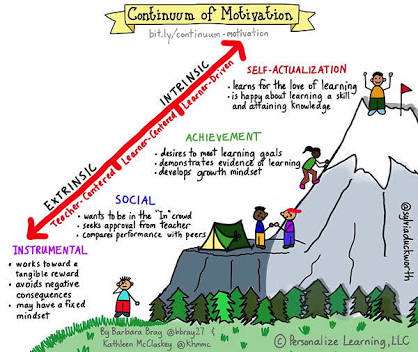
This left me to question are these motivators all that bad. I mean instantaneously the children are doing what the educators want them to do, so how can this be a bad thing? Then I thought back to my training and Pavlovs theory. These children were showing the classic signs of operant conditioning. I could see them becoming controlled by the rewards. So what then happened when another adult asked them to do the same thing without the reward? Would they come to say no because they didn't get the reward every time?
I tested the above questions and there was mixed results some of the children who did not expect the rewards continued to do as asked without the motivators. However the children who had only known the rewards suddenly wouldn't do as asked. I even had a parent comment that at home the child would ask, "what do I get if I do it?".
My question is now this; we often moan how the next generation is becoming the entitled generation, but if we continue to use these motivators in early childhood aren't we the educators setting the children up for this? Their motivation has now changed from a sense of self worth to one of what do I get out of this? I know I prefer children who are proud of their own accomplishments then the children who need constant praise and recognition, that when they don't get it they loose all sense of self worth.
These are just my thoughts and ramblings. Let me know your thoughts
